George NG7A

How Packet Changed Aviation
Tuesday, January 28, 2014
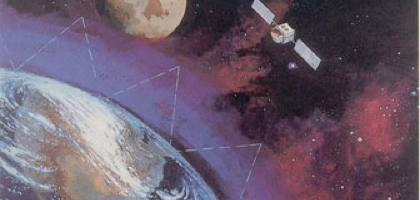
Before the world knew of the internet or the widespread use of email or cell phones, amateur radio popularized a digital mode called packet radio in the mid 1980s. Getting on packet required interfacing a TNC (terminal node controller) to a radio, which allowed connecting to the serial port to a personal computer. And voilá, digital text could be transmitted over the airwaves in little bursts of chopped up data called packets. Like the electronic bulletin boards, packet stations relayed messages between participating stations. Some stations bounced bursts of data on the ionized trails of meteors to make very long distance contacts on VHF and UHF. And many stations used spotting networks, to alert their friends when rare DX stations came on the HF bands.
Perhaps the most novel approach to packet occurred in the early 1990s on a sunny afternoon in Sedona, Arizona, when a squadron of planes transmitted their GPS coordinates over the air during a Civil Air patrol exercise. For the first time the coordinator on the ground could track and direct search activities through the multitudes of canyons, mesas and mountains, where no radar signals had bounced before. The idea was very simple: instead of bouncing radar signals off of small targets, let the targets report their own positions. It allowed planes to be tracked at much lower altitudes, most down to the surface of the runway.
Meanwhile, back in Salem, Oregon, United Parcel Service was building a packet network in the 220 MHz band to better track its drivers and packages. This technology was replaced by cell phones, but came in handy when it came time to solving another pressing problem: how to better see planes and avoid them.
The current air traffic control system is analogous to the telephone system of the 1950s, where a long distance telephone call could not be placed without talking to an operator. Similarly in today’s airspace, every flight has to talk to an air traffic controller from the moment it taxis to the moment it lands at its destination.
The stifled growth in air traffic is largely limited by technology. Airplanes are still separated by ground based radar controllers issuing instructions by two way voice radio. The analogy to cars would be a traffic cop standing at every intersection with a CB radio issuing instructions on who is to turn, stop, go straight, etc. You can imagine what kinds of traffic jams it would create, even with a fast-talking officer. Fortunately, traffic lights exist, and drivers self-separate by seeing each other.
Airplanes, which can’t always see each other in clouds and fog, do have a crude form of last-resort self-separation called TCAS (Traffic Collision and Avoidance System). It is only available in higher end aircraft, and provides only altitude separation, and in some cases, very rough azimuth (+/- 20 degrees) indication of where the traffic is. Another limitation of TCAS is that the 1090 / 1030 MHz frequency is shared with ground based radars. The 1090ES channel’s old WWII-era style of pulse position modulation coupled with congestion offers almost no room for growth.
A new type of datalink, called the Universal Access Transceiver (UAT), was developed by my team at UPS Aviation Technologies in the 2000s. The UAT’s purpose is to support traffic messages as well as receive weather and important text broadcasts from the ground. It operates on a worldwide aviation frequency of 978 MHz using a more modern type of modulation that supports a 1 Megabyte per second bandwidth and is poised for traffic growth. Comparing 978UAT with the old 1090ES is analogous to comparing cable to dial-up modem.
The datalink works much like packet, in the sense that position heading and altitude are sent in short bursts once per second. Each station has a randomly assigned time slot that is synchronized to the GPS timing mark and listens when it is not transmitting (many of these protocols were defined by Jim K7KK). Ground stations send their traffic towards the end of the time slot.
Transmitting position heading and altitude data from the plane’s navigation sources is called Automatic Dependent Surveillance Broadcast, or ADS-B. Our team from UPS AT first demonstrated it in Bethel, Alaska in August 1999, and implementation quickly grew using the low cost UAT978 technology. Capstone was the multi-faceted program that tested the ADS-B technology in Alaska. It was the precursor to the FAA’a NextGen Airspace System in the US (and GATAM worldwide), which shifts navigation, communication and surveillance more to a space-based navigation system.
Incidentally, the first ground-based base station antenna was a familiar J-Pole fashioned out of 300-ohm twin lead by Tom AB7NV on an experimental frequency of 966 MHz. Later, that frequency was shifted to 981 MHz, before settling on the current worldwide 978 MHz standard.
ADS-B was awarded the Collier Trophy in 2007, and was a cooperative effort between industry, government and academia. Packet radio techniques are now used both on 1090ES and the faster 978UAT datalinks, which are an integral part of the Next Generation Airspace System. More technical information can be found on the RTCA’s website.
73,
George NG7A
© Copyright 2011 through 2016 George Cooley All Rights Reserved
The current air traffic control system is like the telephone system in the 1950s, where a call couldn’t be made without talking to an operator. A new technology based on the principles of packet lets planes see each other through clouds and fog without talking to the ground.

